Hrudhyam — Mangalya —
To Preserve Varanamalyam ·The Wedding Garland
വരണമാല്യം
Varamala /ಹೂಮಾಲೆ / மணமாலை/वरमाला
Where the wedding garland, bouquet and flowers of your wedding day
are gathered, stilled, and given the form of an heirloom.
BENGALURU ◆ KOCHI ◆ CHENNAI ◆ GURUVAYOOR
From ceremony,
into inheritance.
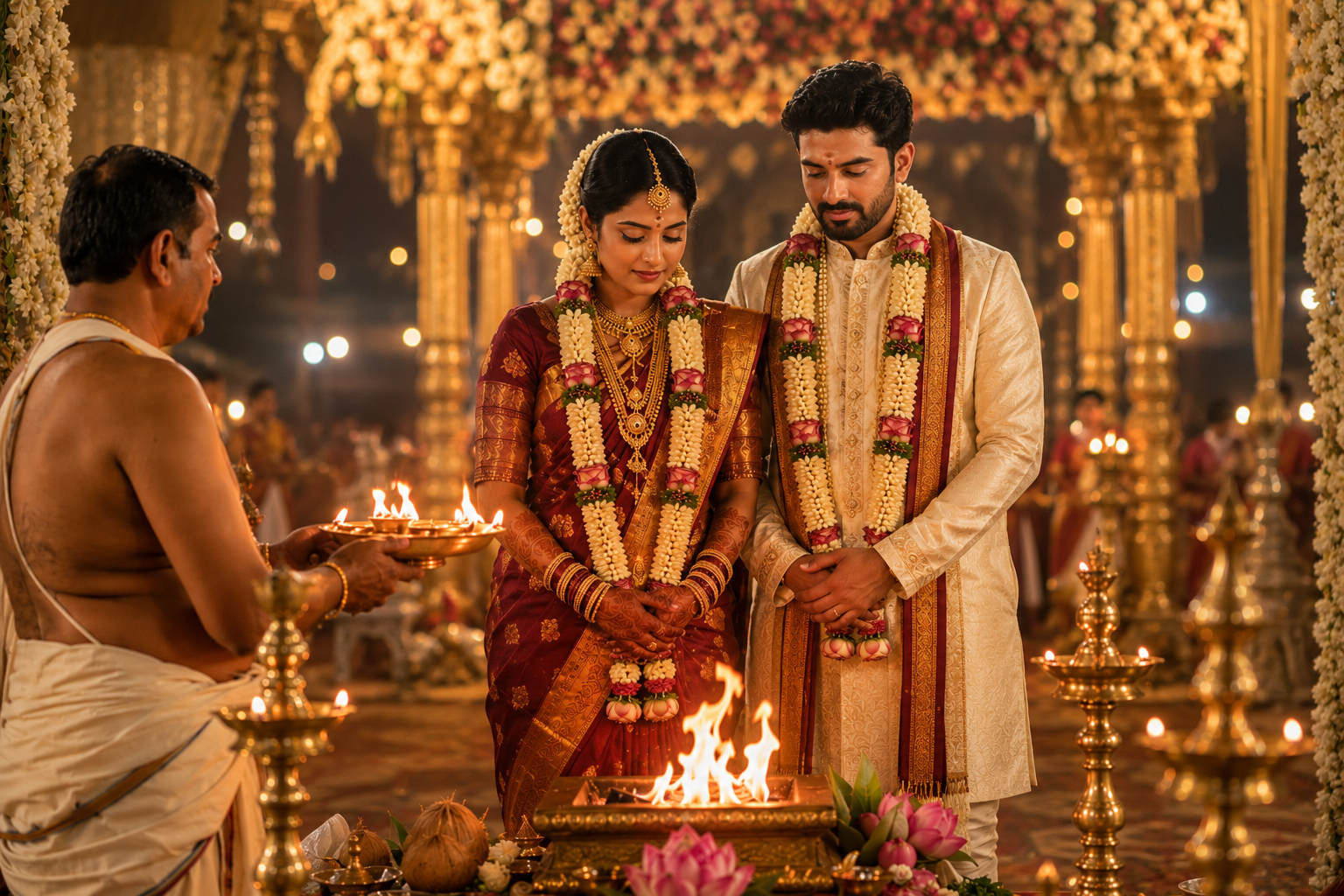
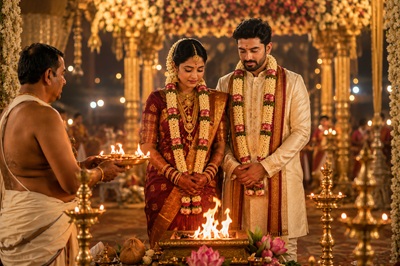
In every Kerala home, there is a quiet practice. The wedding garland is laid before the lamp, the bouquet is set upon the shrine, and over the slow seasons that follow, the petals dry and the colour fades. The memory is kept; only its vessel is lost.
Hrudhyam Mangalya was built for that moment of fading. We gather the flowers of your wedding day, return them to a state of permanence, and place them within an archival object designed not for a season, but for the generations who will inherit it.
— Preserving sacred memories —
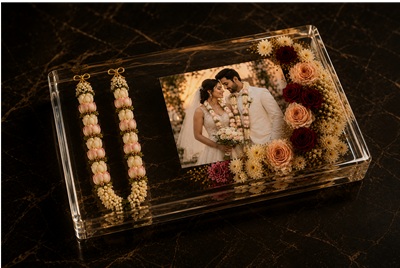
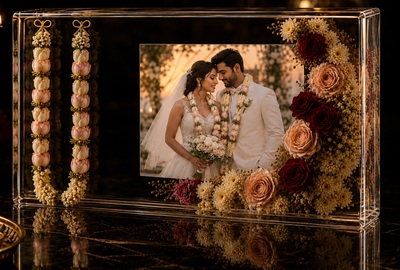
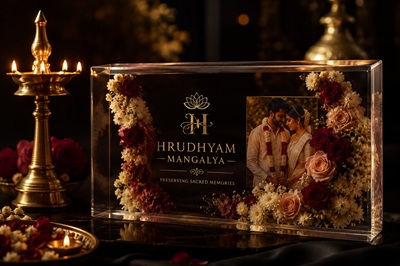
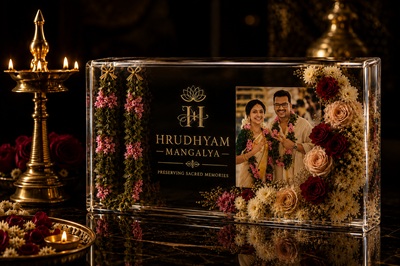
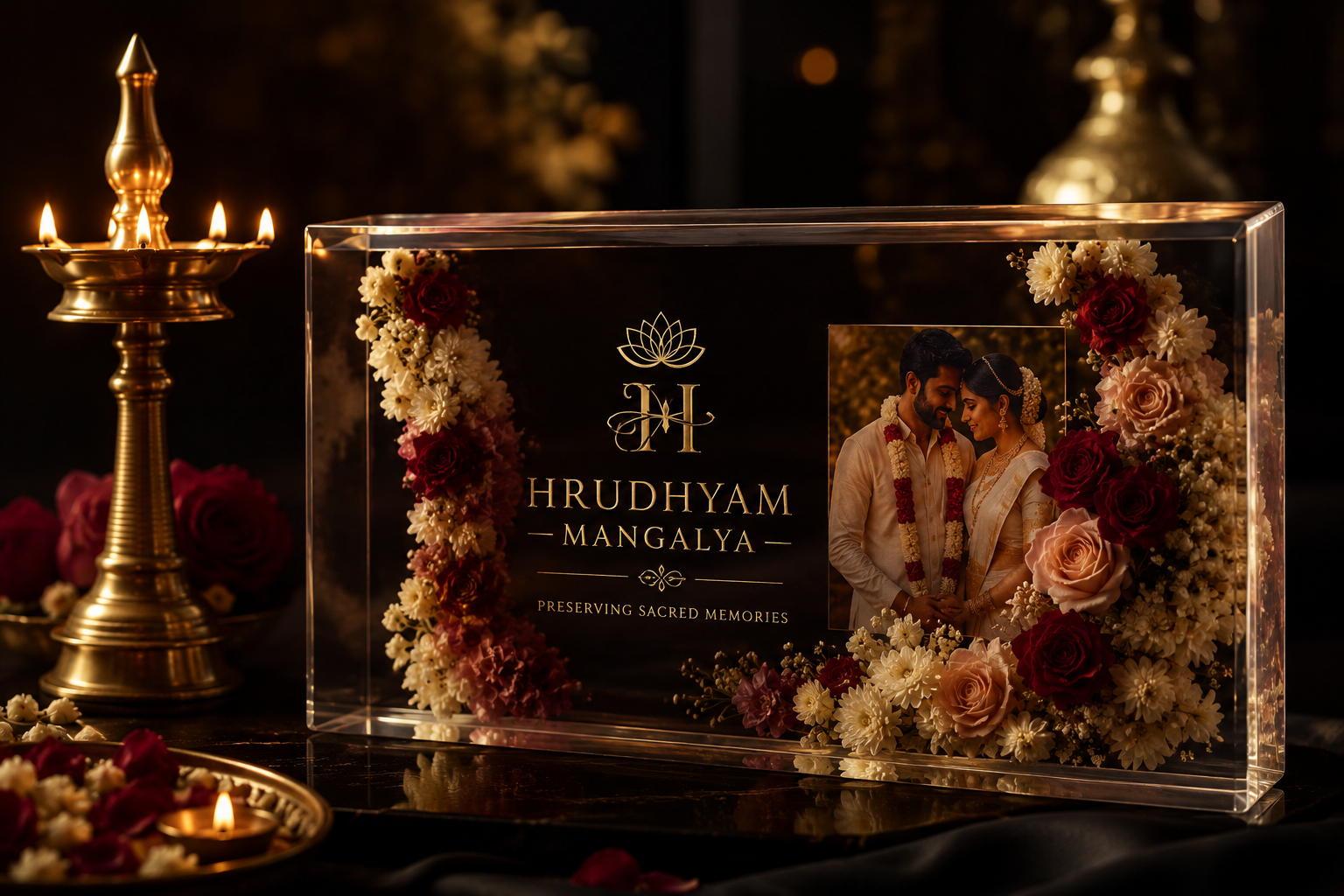
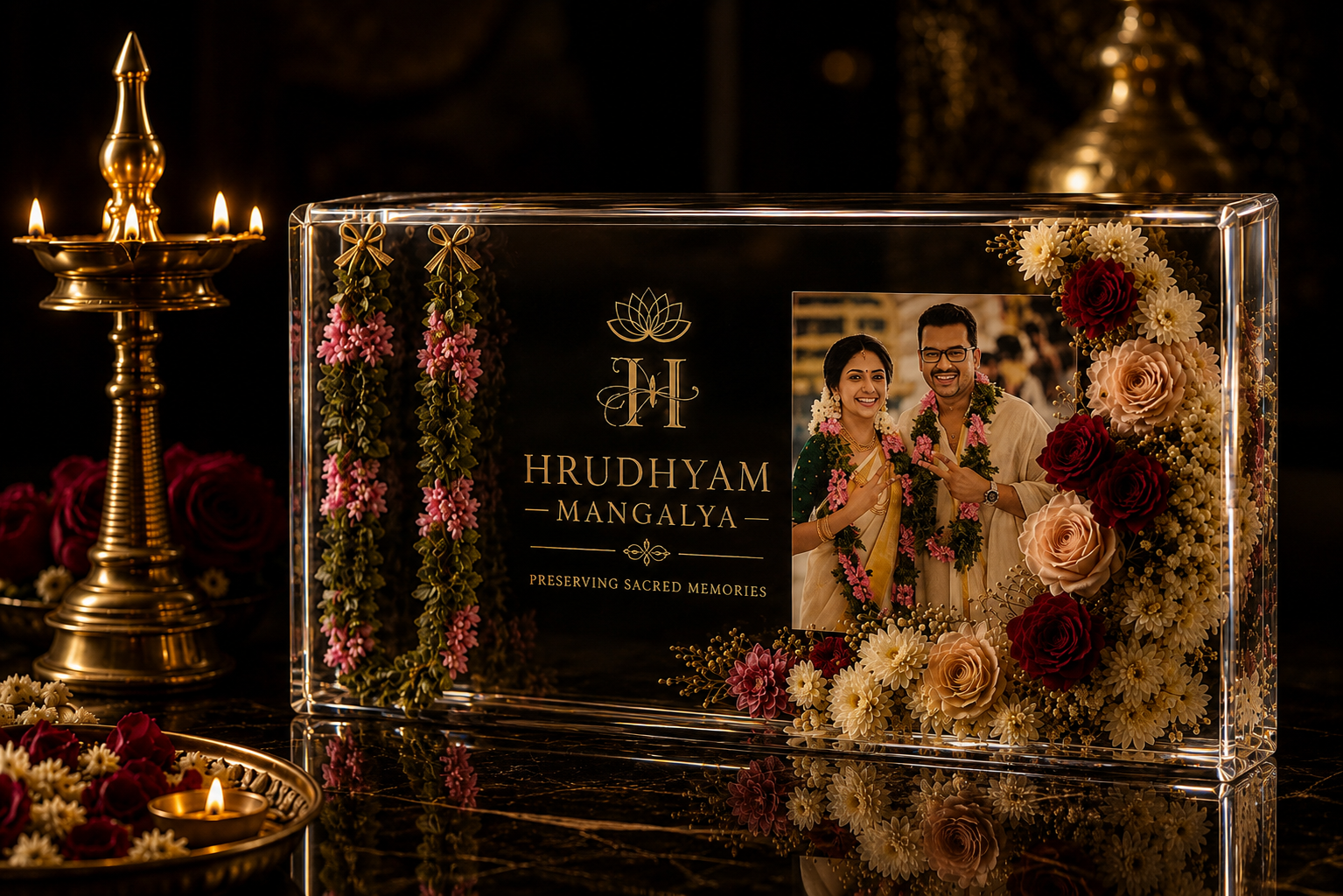
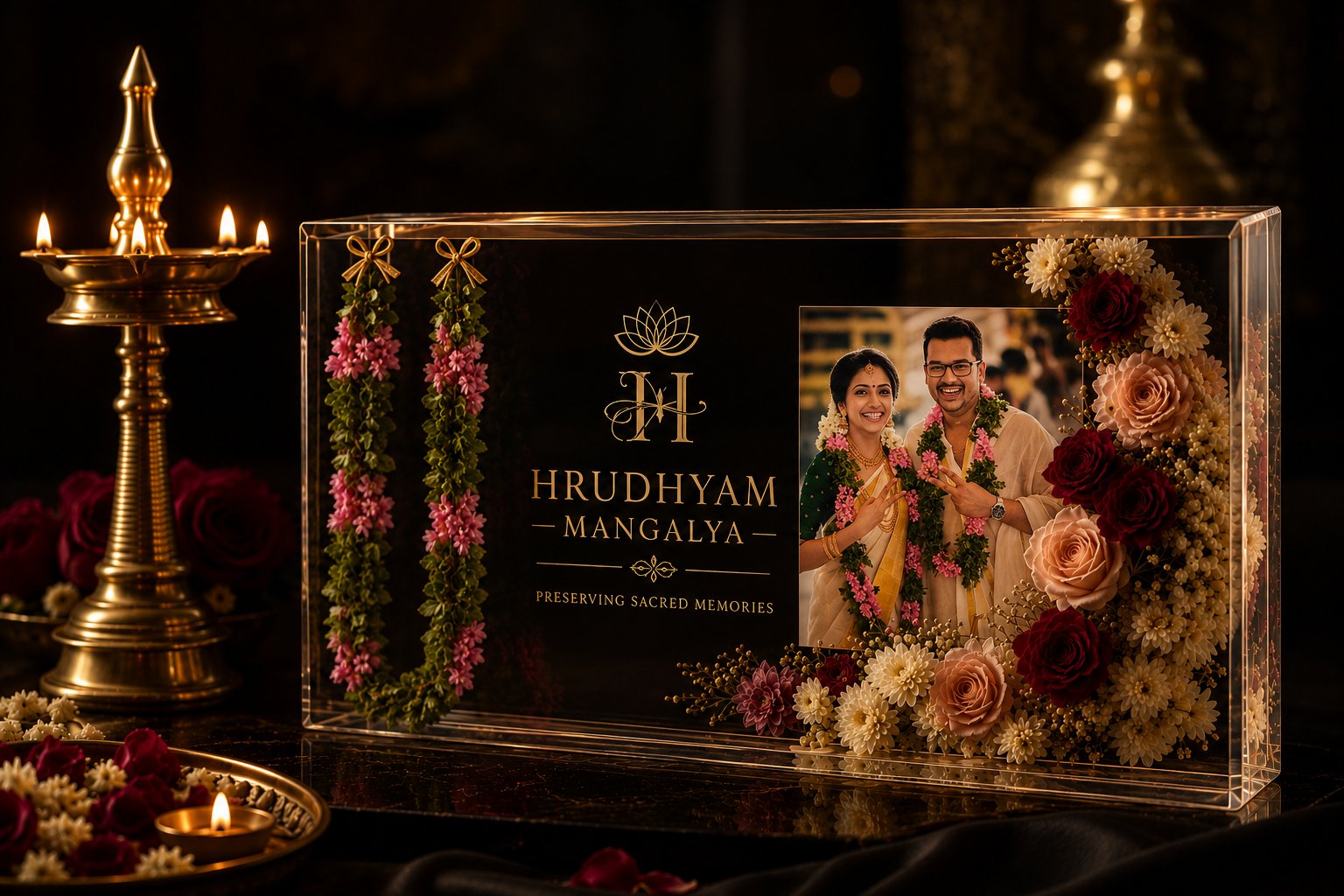
A crystal vitrine for a sacred moment.
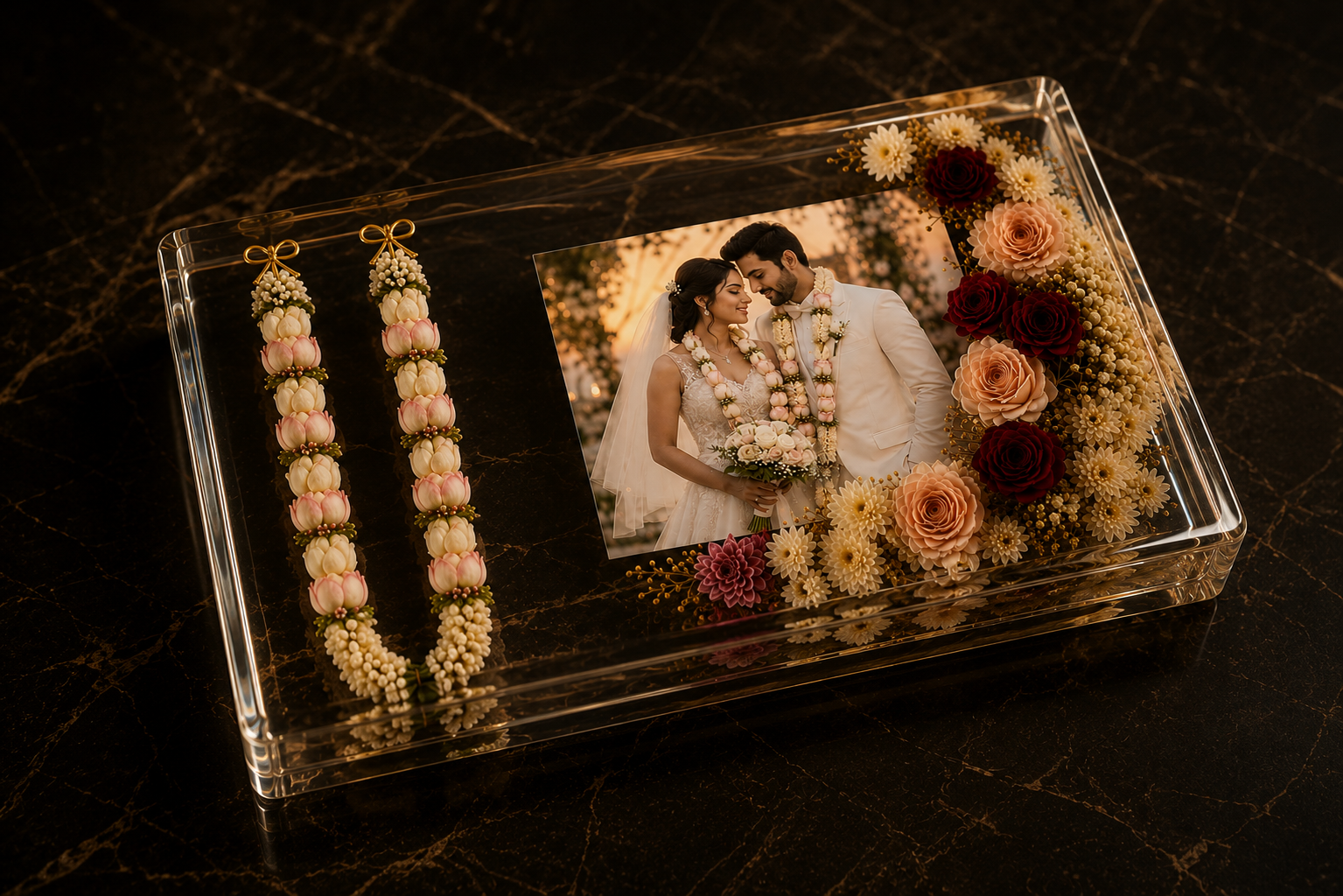
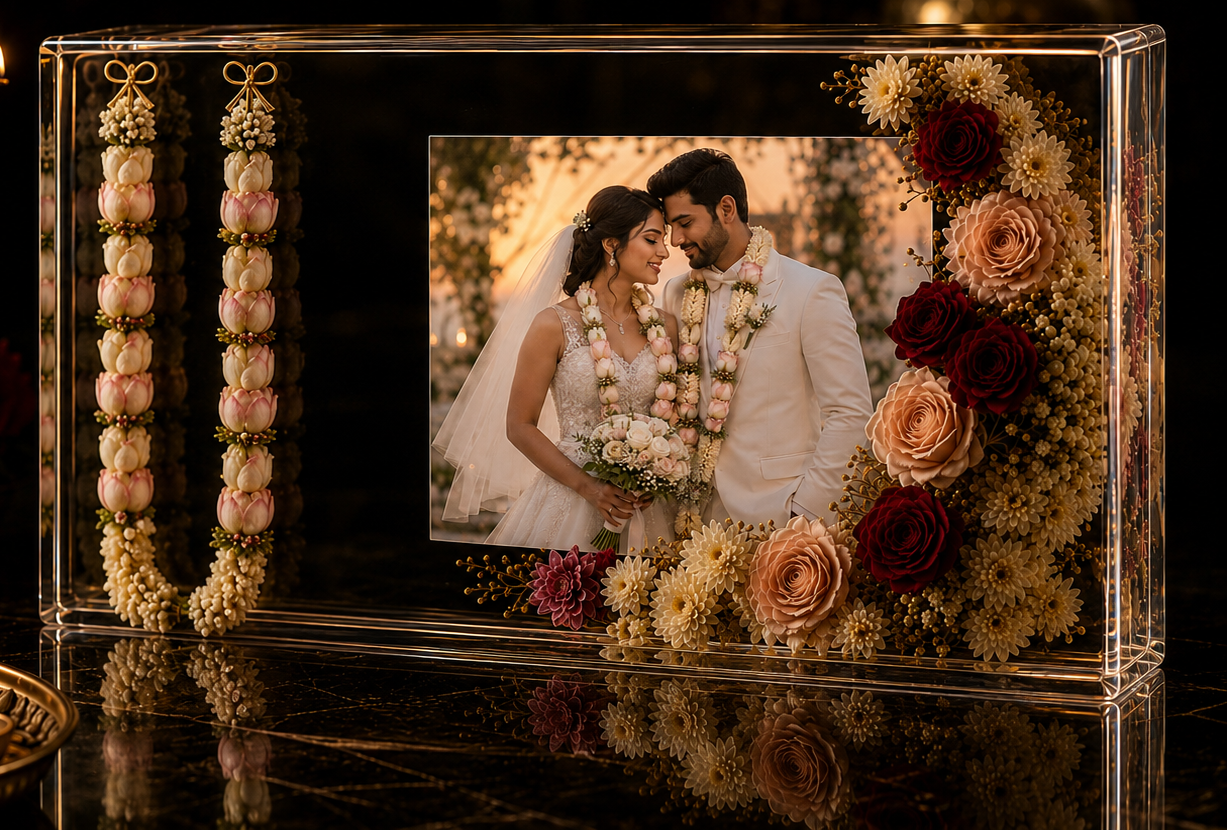
Each piece is built around a controlled archival chamber, finished in optical-grade cast acrylic with hand-polished edges. Inside, your varamala, bouquet and wedding photograph are suspended in a still microclimate — supported, never entombed.
The petals breathe within their chamber. The colour holds. The form remains.
- Format
- Wall & pedestal vitrinelandscape · portrait · monolith
- Dimensions
- Atelier sized14″ to 24″ — bespoke per piece
- Materials
- Virgin cast acrylicUV-stable · museum clarity
- Within
- Conditioned chamberarchival microclimate · serviceable
Seven weeks. A single hand.
Every Hrudhyam Mangalya piece is a slow object. The flowers are gathered within hours of the ceremony, and the work that follows unfolds over seven weeks of patient, archival craft.
The Gathering
Within twelve hours of the ceremony, your garland and bouquet are received in white cotton, by hand, in a silk-lined collection box.
The Stilling
Botanical flower preservation relies on removing moisture to halt natural decay while maintaining structural integrity and color pigments. Structurally, flower preservation succeeds by maximizing the Vapor Pressure Deficit (VPD), which drives moisture from the internal plant tissues out into the surrounding air or desiccant medium.
The Composition
Flowers are arranged within the chamber on near-invisible supports, your photograph mounted on cotton rag, the desiccant placed and concealed.
The Sealing
The vitrine is closed with a serviceable gasket, the rear plate set behind a hidden bezel, and the piece delivered, by appointment, to your home.
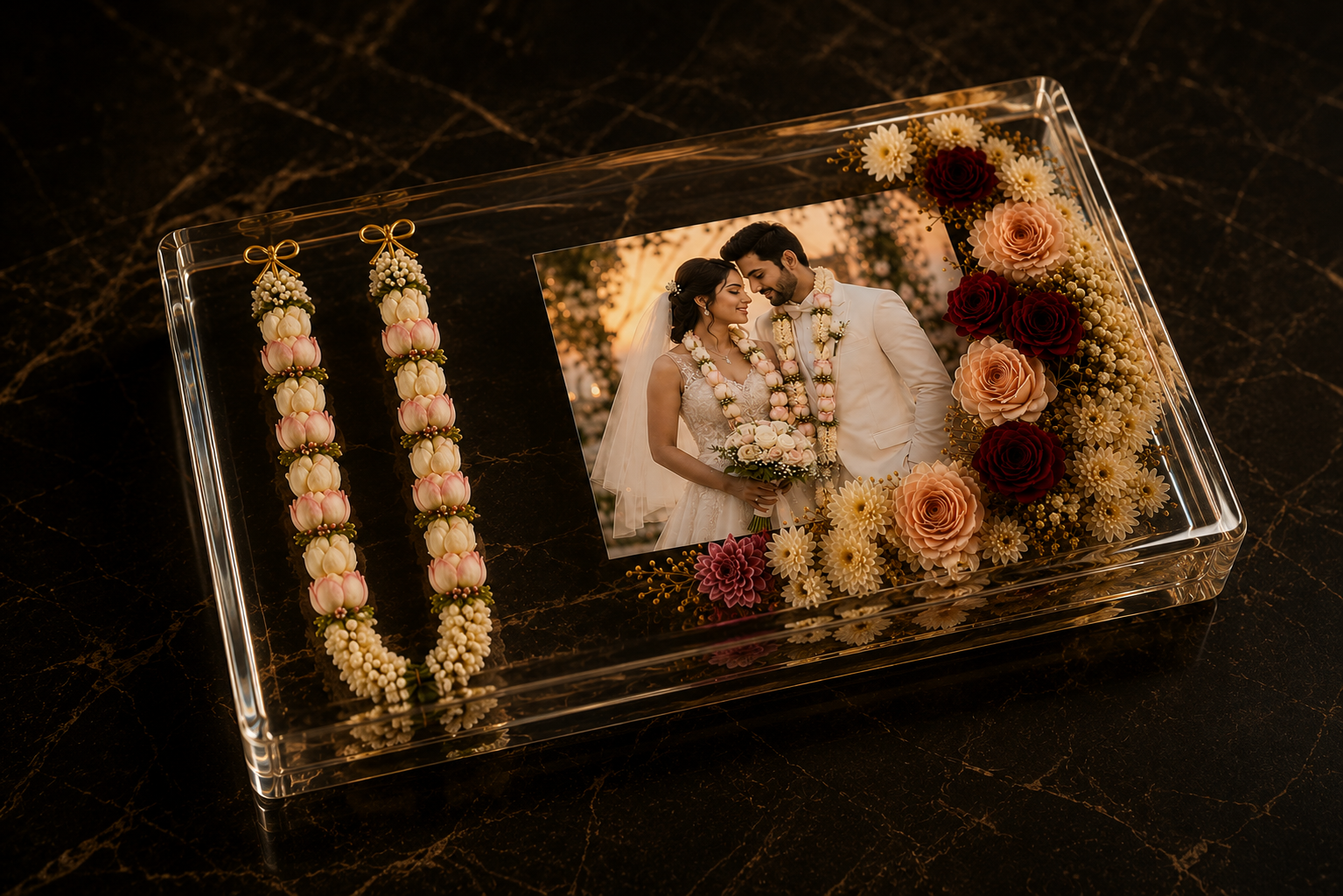
The chamber, unseen.
Where a conventional resin block traps a flower in heat and time, our pieces hold the blooms in a still archival air — a chamber whose walls are bonded from within, so the outer faces remain unbroken to the eye.
The desiccant cassette is replaceable through a concealed rear panel. The piece is built not to be sealed away from time, but to be cared for through it — like any object meant for inheritance.
The science of slowing time.
We do not simply dry your flowers. We apply the same conservation principles museums use to preserve botanical specimens — controlling the air, the moisture, and the materials so that what fades in a season is held, instead, for decades.
Gentle Desiccation
Each bloom is dried slowly in fine silica, drawing out moisture without heat or pressure. The cellular structure is preserved, the pigment locked, the form held as it was on the day.
A Controlled Microclimate
The flowers rest within a sealed chamber held at a stable, archival humidity — the same balanced range conservators maintain for herbarium specimens. Neither damp enough to decay, nor so dry as to grow brittle.
Never Touched by Resin
Unlike conventional resin blocks, the flowers never meet curing epoxy. They are isolated from its heat and chemistry entirely, spared the yellowing, clouding and scorching that embedding inflicts over the years.
Conservation is not the denial of age, but its careful stewardship. We cannot make a flower eternal — but we can give it the long, dignified life of a museum specimen, held in still air for the generations who come to look upon it.
Three traditions.
One sacred form.
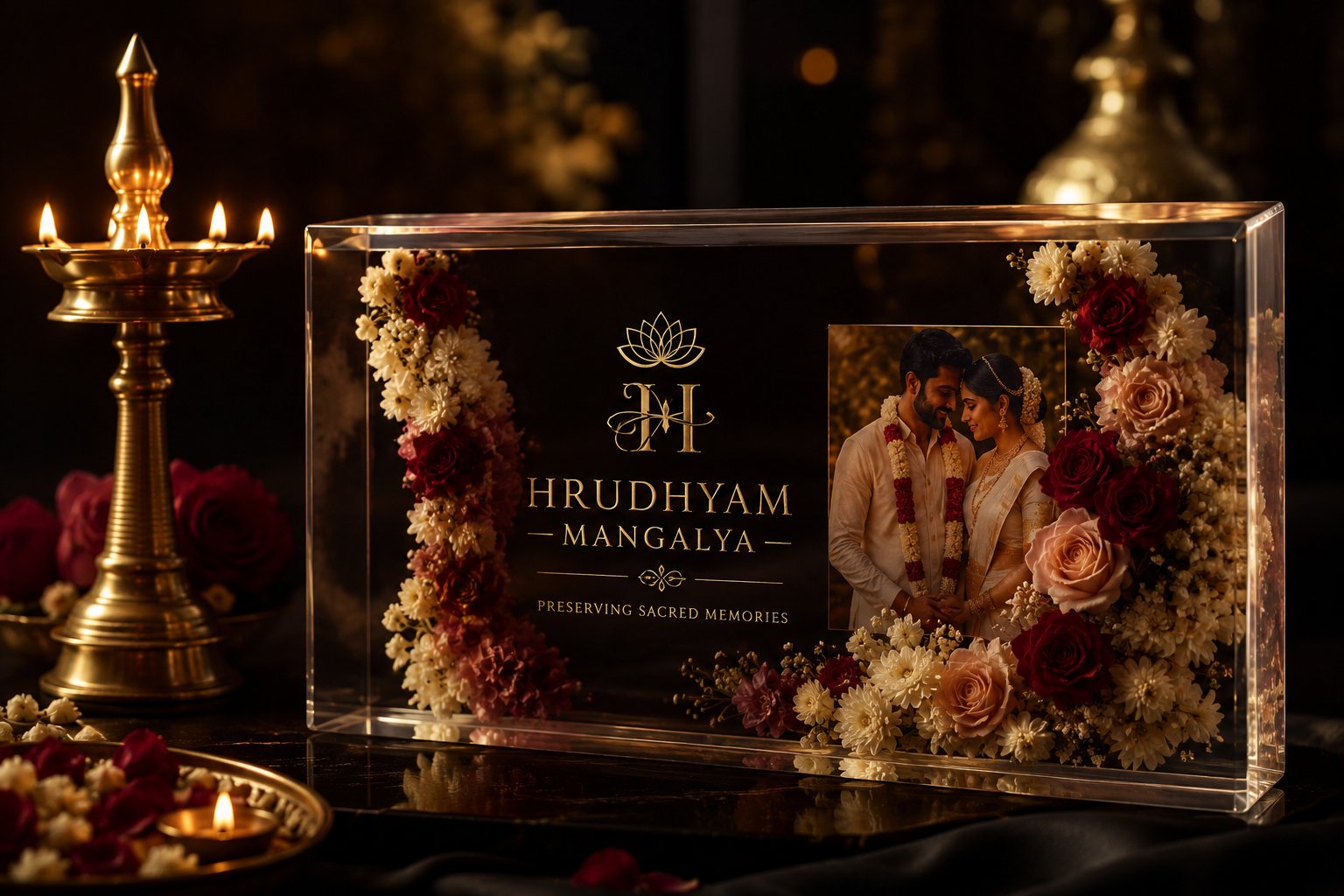
Mangalyam
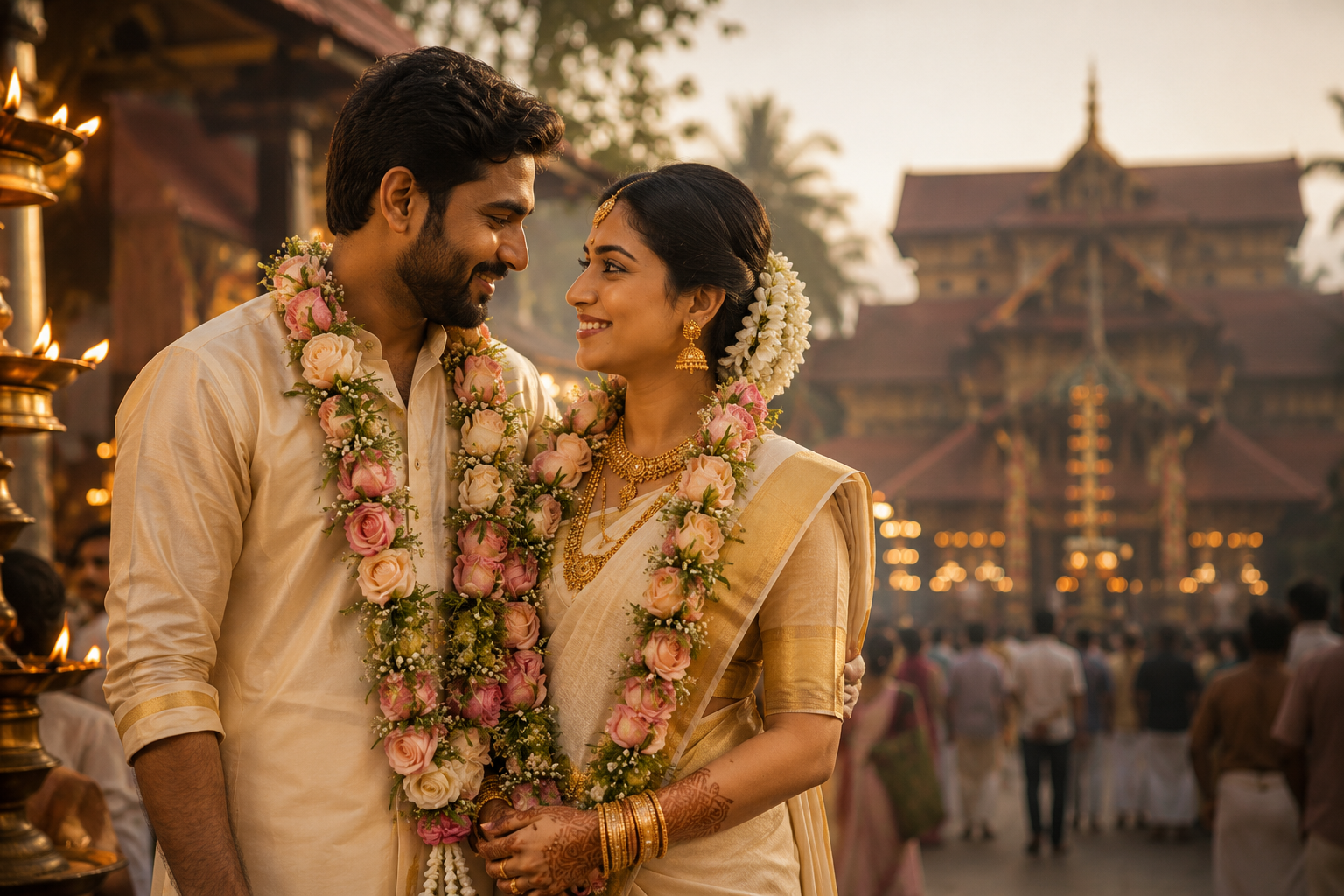
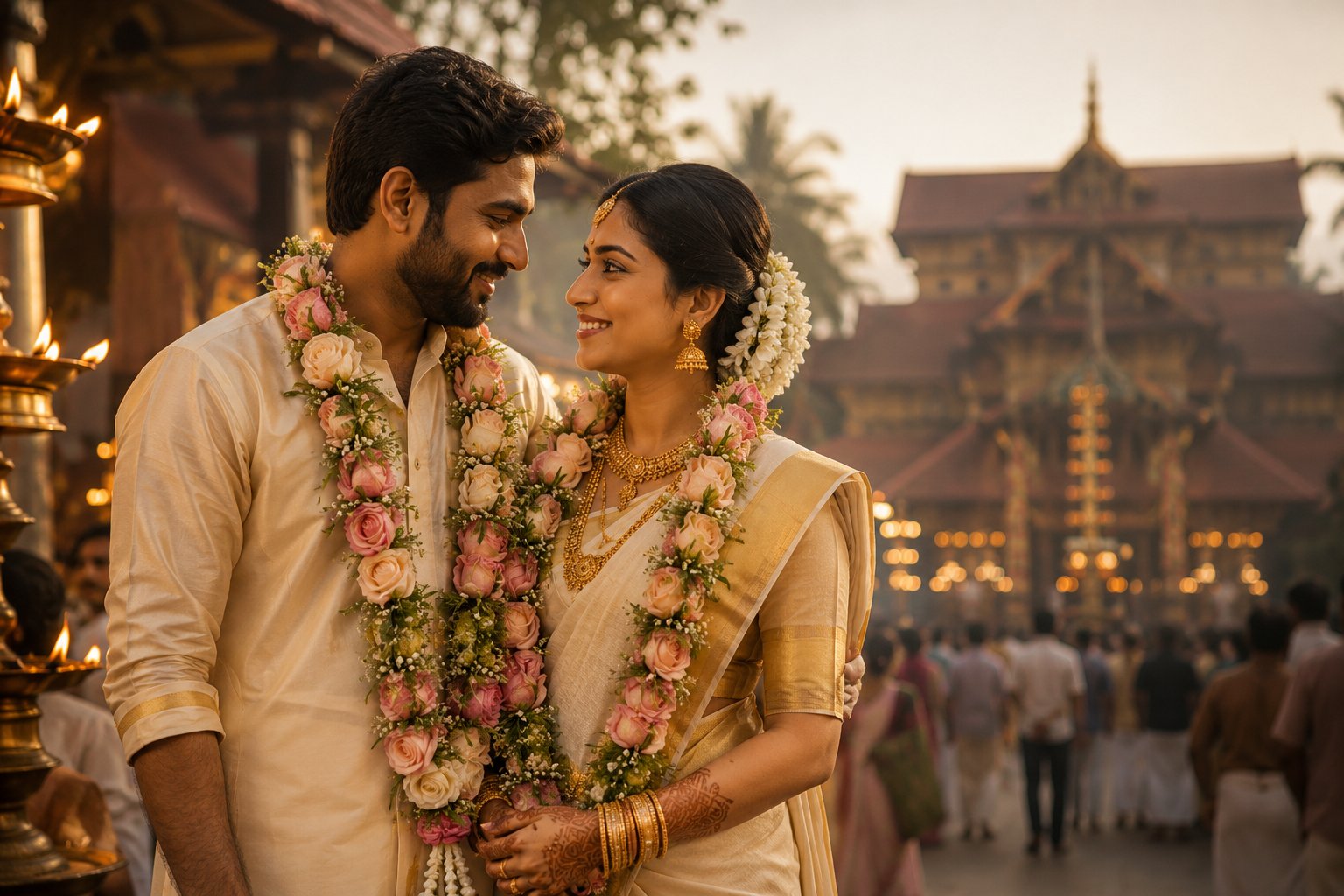
For the Kerala Hindu ceremony — rose, jasmine and chrysanthemum, set against the warmth of the brass lamp.
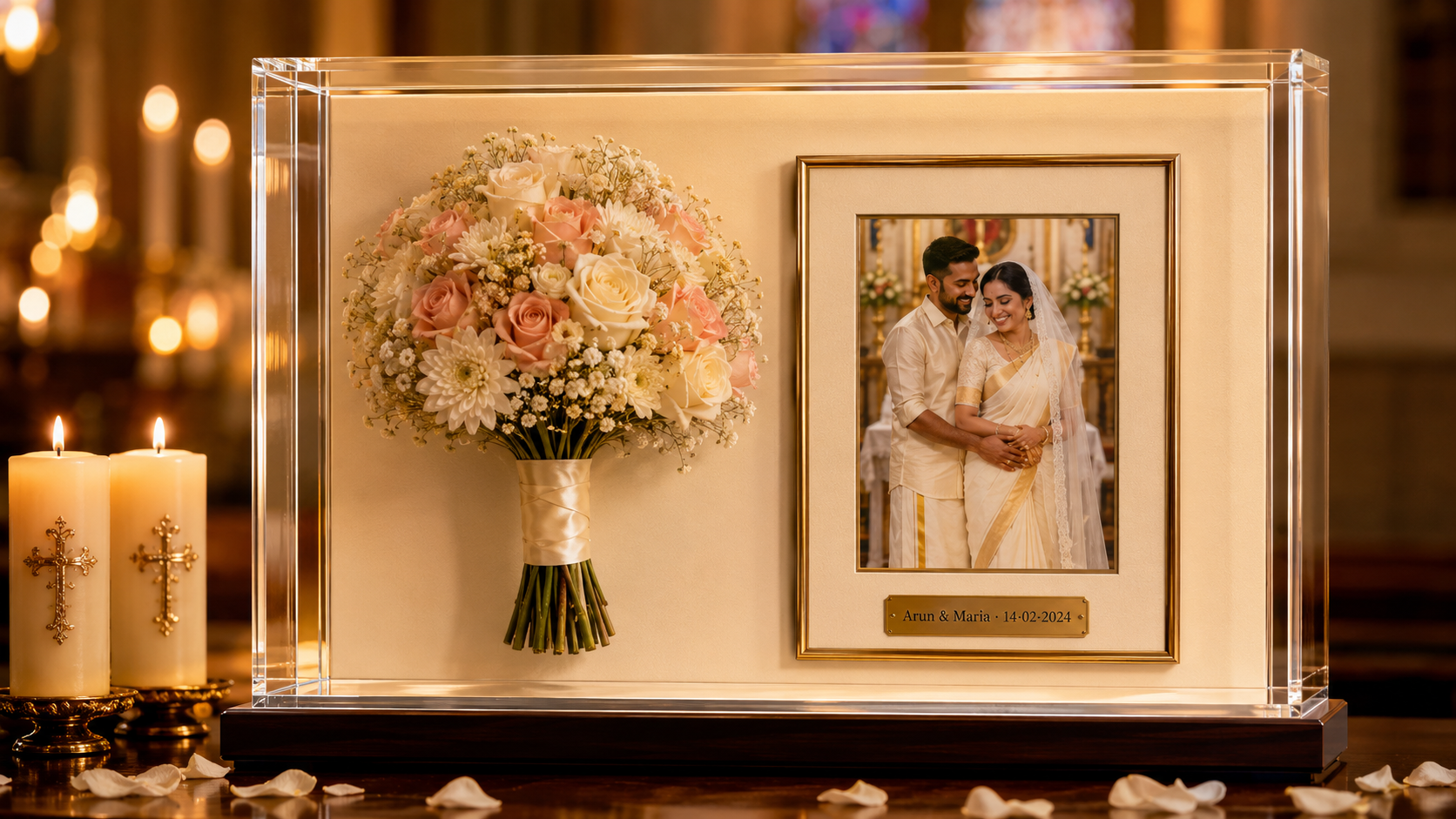
Sacrament
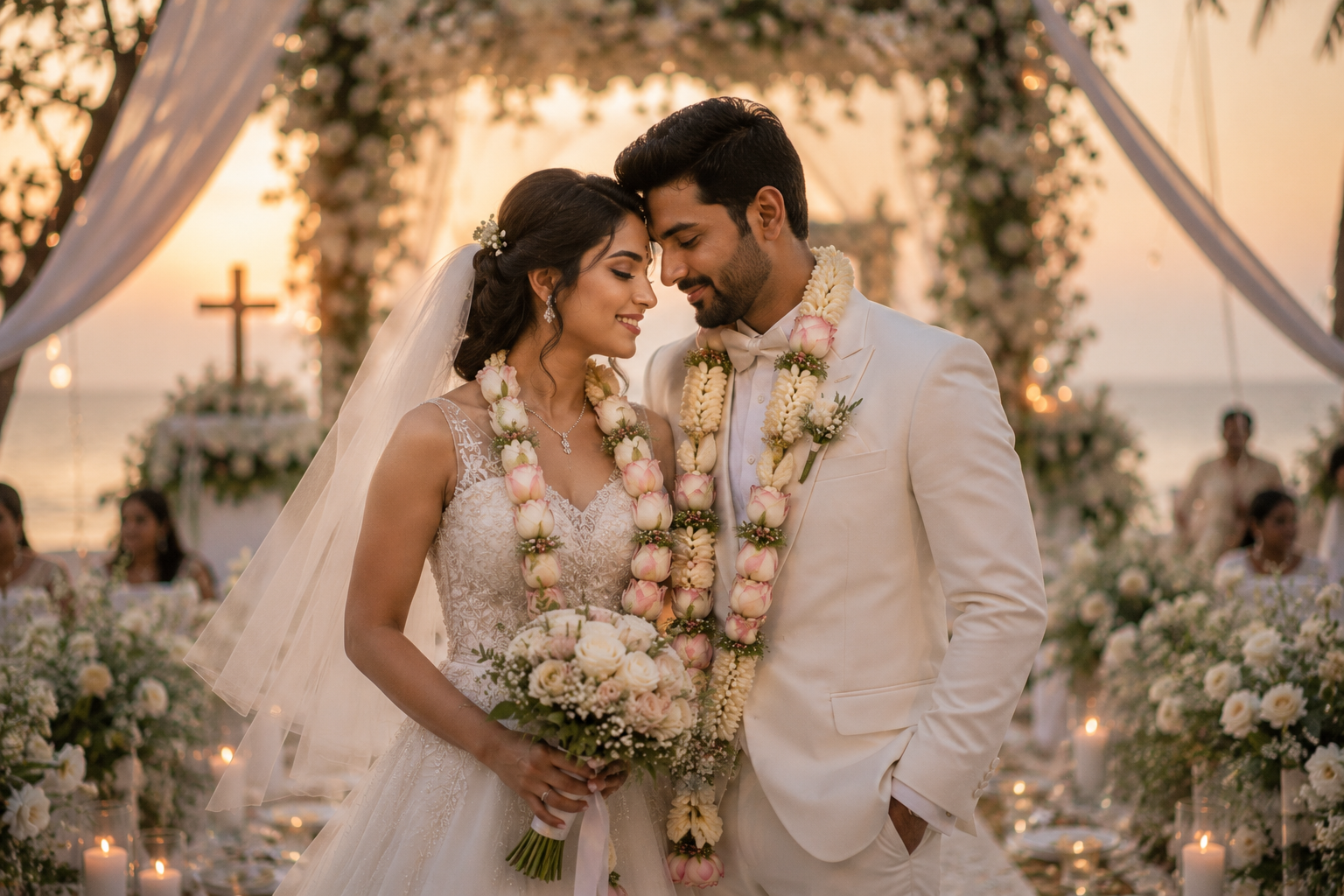
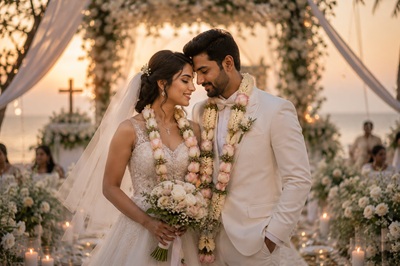
For the Christian wedding — ivory roses, gypsophila and chrysanthemum, framed in archival gold, lit as in the chapel.
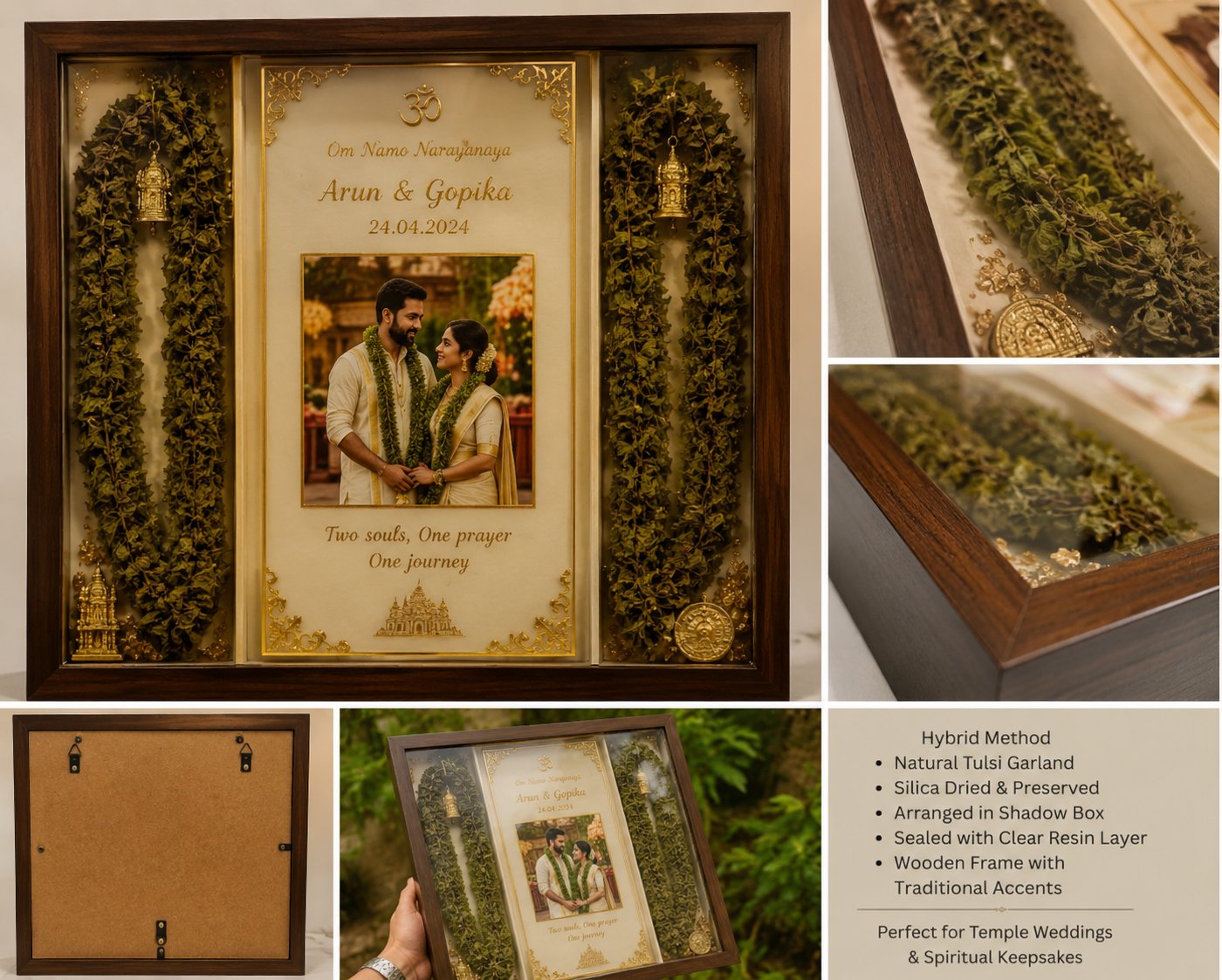
Varamala
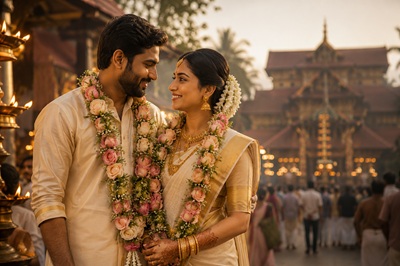
For the temple ceremony — the sacred tulsi garland silica-dried, mounted in a hardwood shadow box. A devotional commission.
Built to be cared for.
A wedding heirloom is not finished on the day it is delivered. It is finished by the years that follow it.
A Numbered Register
Every piece is numbered, registered, and entered into our atelier ledger — your work becomes part of an enduring archive in our care.
Considered Care
Each piece is built to be tended over the years — the conditioned desiccant refreshed, the seal inspected, its archival state quietly renewed.
Honest Materials
No thick resin entombment. No heat. No yellowing over decades. The flowers are held in still air, the way museums preserve what matters.
By appointment only.
Hrudhyam Mangalya is made one piece at a time. We accept a small number of commissions each season, and every consultation begins in conversation.
Pieces commissioned within seventy-two hours of the ceremony hold their colour the longest. We are glad to receive your call before the wedding day itself.
Pieces from the atelier.
Each commission is bespoke. A small selection from our archive — click any image to view at full resolution.